
Canada is promoting CANDU technology for Turkey’s planned second nuclear power plant. Meanwhile, the Philippines is discussing U.S. financing for new nuclear power sources, and Thailand is preparing the conditions for deploying small modular reactors.
Canada and Turkey deepen cooperation in nuclear energy
Canada and Turkey established a strategic partnership on October 22 that also covers cooperation in civil nuclear energy. The agreement was announced during a visit to Ankara by Canadian Prime Minister Mark Carney and Turkish President Recep Tayyip Erdoğan. The two countries aim to strengthen cooperation in the energy sector, support investment and develop ties between businesses, research institutions and national regulators.
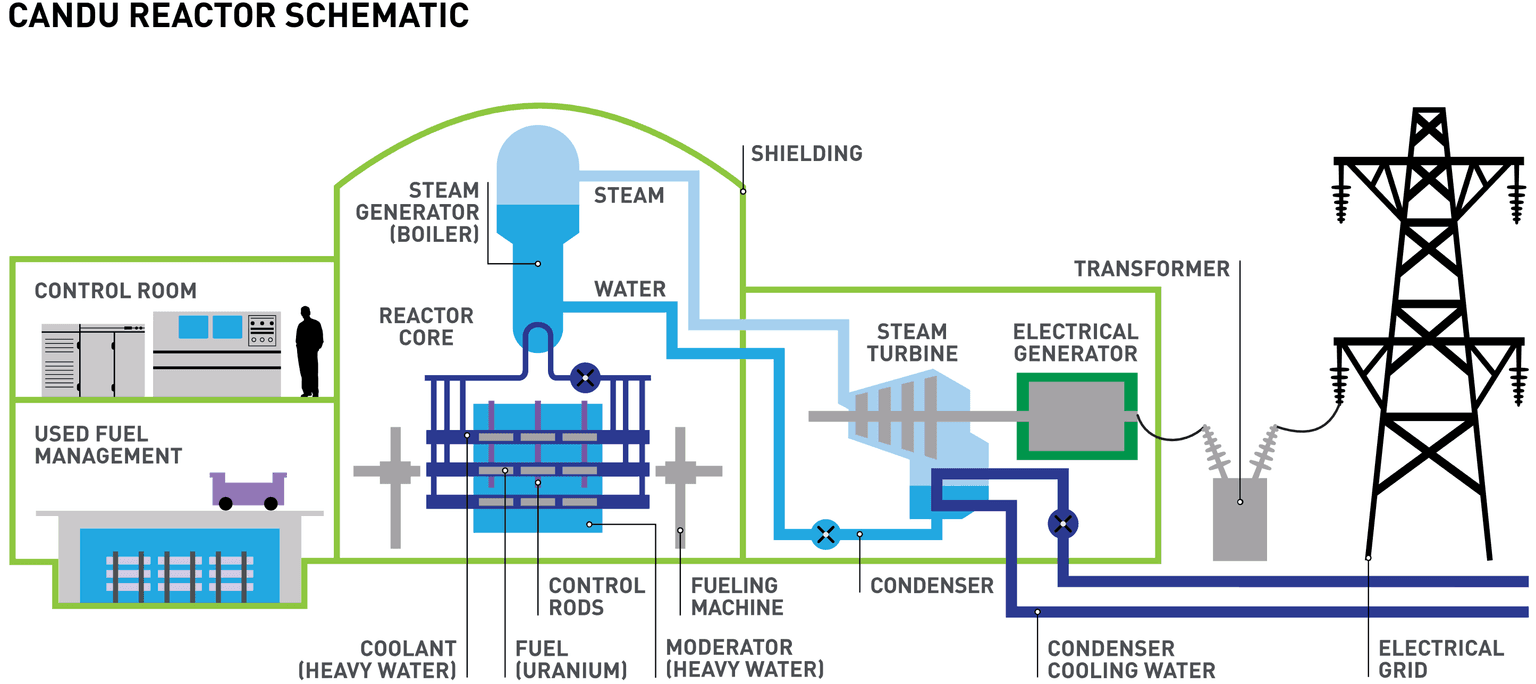 Diagram of a CANDU reactor unit. Source: CNA.ca
One possible area of cooperation is the construction of Turkey’s second nuclear power plant at Sinop on the Black Sea coast. Canadian company AtkinsRéalis is preparing a feasibility study focused on the use of CANDU heavy-water reactors. This work follows a memorandum of cooperation that the company signed in March this year with Turkish state-owned company TÜNAŞ. The document establishes a framework for assessing the potential use of Canadian technology in Turkey’s nuclear program.
The Canadian prime minister said CANDU technology had a good chance of being selected by Turkey, while also noting competition from other suppliers. AtkinsRéalis CEO Ian Edwards also confirmed progress in the talks on November 5.
CANDU reactors use heavy water as a neutron moderator and allow refuelling while in operation. Depending on the specific design, they can also run on natural uranium.
Turkey is also continuing preparations to bring its first nuclear power plant, Akkuyu, online. Russia’s Rosatom is building the plant, which will have four VVER-1200 reactors with a total installed capacity of 4 800 MW. On the first unit, hydraulic strength tests of the secondary-circuit equipment were successfully completed at the end of October, with the steam generators and associated piping subjected to a pressure of 12,6 MPa. The results allow preparations to continue for hot functional tests.
Philippines discuss up to $5 billion in U.S. financing
The Philippines could useloan financing from the United States of up to $5 billion to develop its nuclear program. According to Philippine Energy Undersecretary Giovanni Bacordo, the possibility was discussed with the U.S. International Development Finance Corporation (DFC). Loans with terms of up to 25 years could be made available to private investors in nuclear power plants. For now, however, this is only a potential financing option, not an approved loan or a firm commitment to provide one.
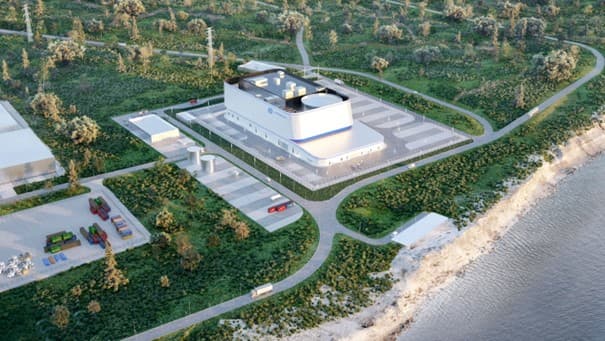 Rendering of the BWRX-300 small modular reactor. Source: GE Vernova
According to its energy plan, the Philippine government aims to reach an installed nuclear capacity of 1 200 MW by 2032. Capacity is then expected to rise to 2 400 MW by 2035 and as much as 4 800 MW by mid-century. Small modular reactors (SMRs) are expected to play an important role in achieving these targets, with their deployment depending, among other factors, on the commercial availability of the various technologies. The country is also developing its legislative framework and nuclear regulatory system, and continuing its cooperation with the International Atomic Energy Agency (IAEA).
In February, the United States announced funding through the USTDA for technical assistance to Philippine company Meralco PowerGen (MGEN). The support is intended to assess U.S. SMR technologies and draw up a timeline for their potential deployment. Further cooperation includes personnel training, technical consultations and sharing experience with the regulatory framework. In October, a Philippine delegation also visited the United States for talks with technology suppliers and financial institutions.
Thailand plans first SMR by 2037
Thailand is also gradually creating the conditions for nuclear power plants to become part of its energy mix. A draft update to the power development plan, PDP2026, envisages the first small modular reactor, with a capacity of approximately 300 MW, entering service in 2037. Total installed SMR capacity could reach up to 9 000 MW by 2050. These are targets in a plan that has not yet been approved, rather than formally approved investment projects.
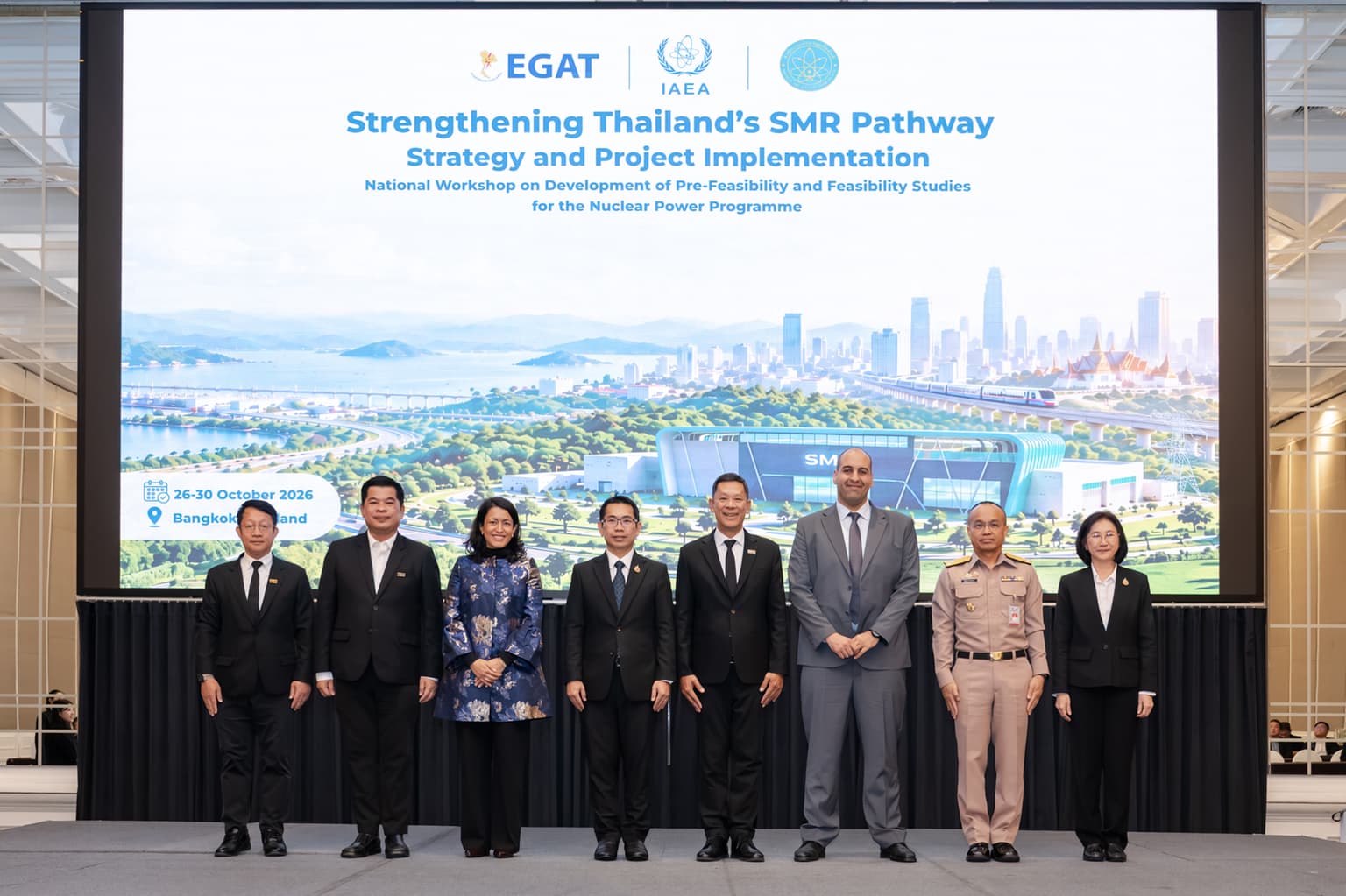 IAEA and Thai utility EGAT technical workshop focused on small modular reactor (SMR) development. Bangkok, October 2026. Source: EGAT
Alongside technical preparations, Thailand is also working to establish the necessary regulatory framework. The Office of Atoms for Peace (OAP), the nuclear regulator, is preparing more detailed rules for site selection, module manufacturing and assembly, and radioactive waste management. A draft law governing civil liability for nuclear damage is also being developed, alongside a training system for nuclear regulatory professionals. On November 4, the OAP also met representatives of GE Vernova Hitachi to discuss BWRX-300 technology and experience from its development. This does not, however, mean a decision has been made to select this technology for Thai projects.
More concrete preparations will also be supported by the U.S. agency USTDA, which published a call for proposals at the end of October for a pre-feasibility study on SMRs with a combined capacity of approximately 600 MW. The study will assess the possible siting of two units, each with a capacity of approximately 300 MW, in southern and northeastern Thailand. It will evaluate the technical, economic, regulatory and environmental conditions for their implementation.